Thalassemia
Thalassemia
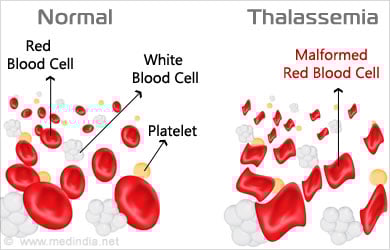
Thalassemia is an inherited blood disorder where the body doesn't produce enough hemoglobin, the protein in red blood cells that carries oxygen. This leads to a shortage of healthy red blood cells (anemia), which can cause fatigue and more serious health complications.
Types of Thalassemia
The condition is named after the part of the hemoglobin molecule that is missing or mutated:
- SAlpha Thalassemia: Four genes are involved in making the alpha hemoglobin chain. You get two from each of your parents. The seriousness of alpha-thalassemia depends on how many copies of the genes are missing:
- Beta-thalassemia: Two genes are involved in making the beta hemoglobin chain. You get one from each of your parents. Unlike the missing genes that cause alpha-thalassemia, small changes in the gene cause beta-thalassemia.
Risk Factors
Factors that raise your risk of thalassemia include:
- Family history of thalassemia: The condition passes from parents to children through genetic changes in hemoglobin genes.
- Certain ancestry : Thalassemia happens most often in people of South Asian, Italian, Greek, Middle Eastern or African descent.
Symptoms
Symptoms of Thalassemia often don't appear until the disease is advanced, but may include:
- Weakness
- A change in skin color or a yellowing of skin and eyes.
- Changes or problems with facial bones.
- Slow growth.
- Swelling of the stomach area, also called the abdomen
- Dark urine.